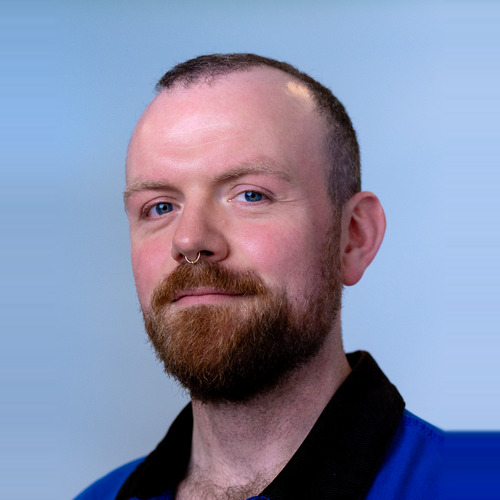
About
I’m a postdoctoral researcher in precision psychiatry: the effort to tailor psychiatric diagnosis and treatment to the individual patient, rather than to the average of many. I hold positions at Amsterdam UMC, Department of Psychiatry, and at Leiden University, Institute of Education & Child Studies.
The question I keep returning to:
Can we measure something in an individual’s brain that helps explain, predict, and ultimately improve their diagnosis and treatment?
My approach to answering this question combines brain scans from thousands of people across many countries, far more than any single study or hospital can collect, with machine learning to find patterns that hold at the level of the individual patient.
What I work on now
I work across obsessive-compulsive, anxiety and mood disorders.
At Amsterdam UMC I work with Prof. dr. Odile van den Heuvel on brain development and obsessive-compulsive disorder. We use Generation R, a Dutch study that has followed thousands of children from before birth with repeated MRI scans, to ask how differences in brain development relate to the emergence and persistence of symptoms through childhood and adolescence.
At Leiden University I work with Dr. Moji Aghajani on brain development and clinical anxiety in young people, largely within the ENIGMA-ANXIETY consortium.
Across both positions, the aim is to keep the individual in the picture, and to model the differences that usually get averaged away. The research page goes into what that involves in more detail.
From biomarkers to brain development
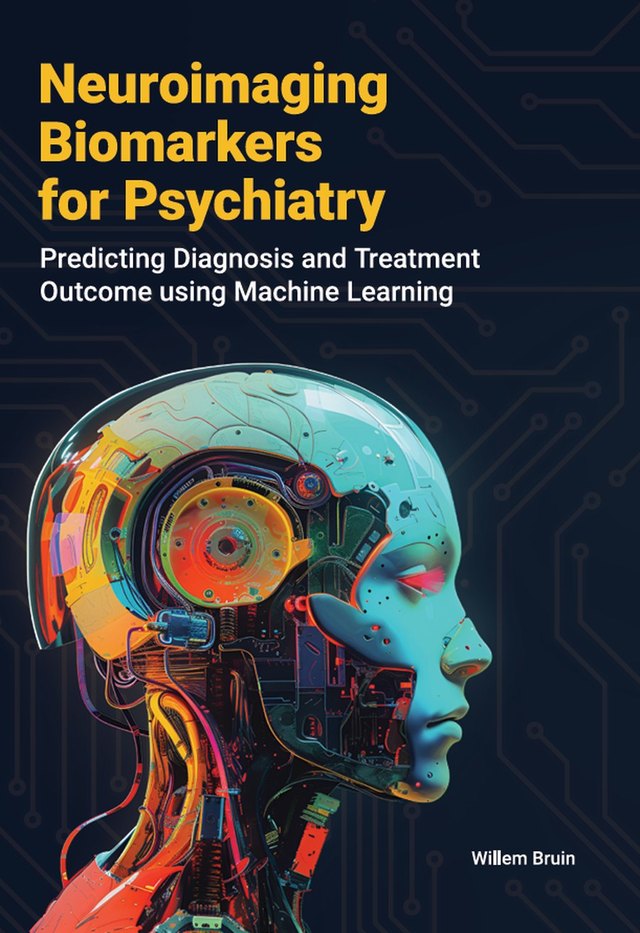
I completed my PhD in 2024 at Amsterdam UMC, Department of Psychiatry, supervised by Prof. dr. Guido van Wingen and Prof. dr. Damiaan Denys.
Psychiatric diagnosis rests on the subjective assessment of symptoms. Patients sharing the same diagnosis can look very different from one another, while symptoms often overlap across disorders, making misdiagnosis possible. Treatment guidelines largely follow a one-size-fits-all logic, which for some patients means delayed treatment or a treatment that was never going to work. The thesis asked whether machine learning applied to neuroimaging data could produce generalisable biomarkers, objective measurements of the brain that could help identify, distinguish, or predict something about an individual patient to aid clinical decision-making.
The answer was neither a clean yes or no. Biomarkers that at first glance looked convincing in one dataset often do not hold when tested on data collected from new hospitals, and much of what made prediction hard was not noise but the sheer variety among patients themselves. That experience has shaped how I work since: large samples, rigorous external validation, reproducibility, and a lasting interest in how exactly patients differ so much from one another in the first place.
Consortium work
Much of my work runs through international consortia, in which dozens of hospitals and institutes pool their brain scans to answer questions none of them could answer alone. I’ve led and coordinated analyses within ENIGMA, across both the ENIGMA-OCD and ENIGMA-ANXIETY working groups, and within GEMRIC, a global collaboration studying electroconvulsive therapy, together spanning more than seventy sites worldwide.
For ENIGMA-OCD, I developed the consortium’s first shared mega-analytic framework for functional MRI across thousands of individuals at sites around the world. The framework has since been adopted by other working groups.
This kind of work often looks unglamorous, but it is what allows the field to move forward: agreeing on shared standardized protocols, reconciling data collected in different ways at different hospitals, and building analyses that hold up across populations rather than fitting the quirks of one scanner in one place.
My collaboration with Prof. Paul Thompson, director of ENIGMA, has been supported by personal grants from the Royal Netherlands Academy of Arts and Sciences (KNAW): the Van der Gaag, Van Leersum and Ter Meulen grants. They have led to several research visits to his lab at USC, where I have worked closely with the ENIGMA team. The KNAW published a short interview about the Van der Gaag project (in Dutch), on using normative modelling to study brain development in young people with anxiety and mood disorders.
Approach
I care about validation: whether a finding still holds beyond the data from which it was derived. It is often much easier to build a predictive model that performs well in the sample it was developed on than to build one that generalises to patients at a completely new hospital, scanned on a different machine.
That is why I test my models on patients from independent sites and who better resemble those seen in actual practice: people on medication, with multiple diagnoses, and across the full range of illness severity. I also make my analysis pipelines and preprocessing tools open on GitHub, because methods that can be inspected and reused are easier to trust.
A full list of my publications is generated automatically from my ORCID record. Interviews and talks are on the talks and media page, and my CV is available to download.